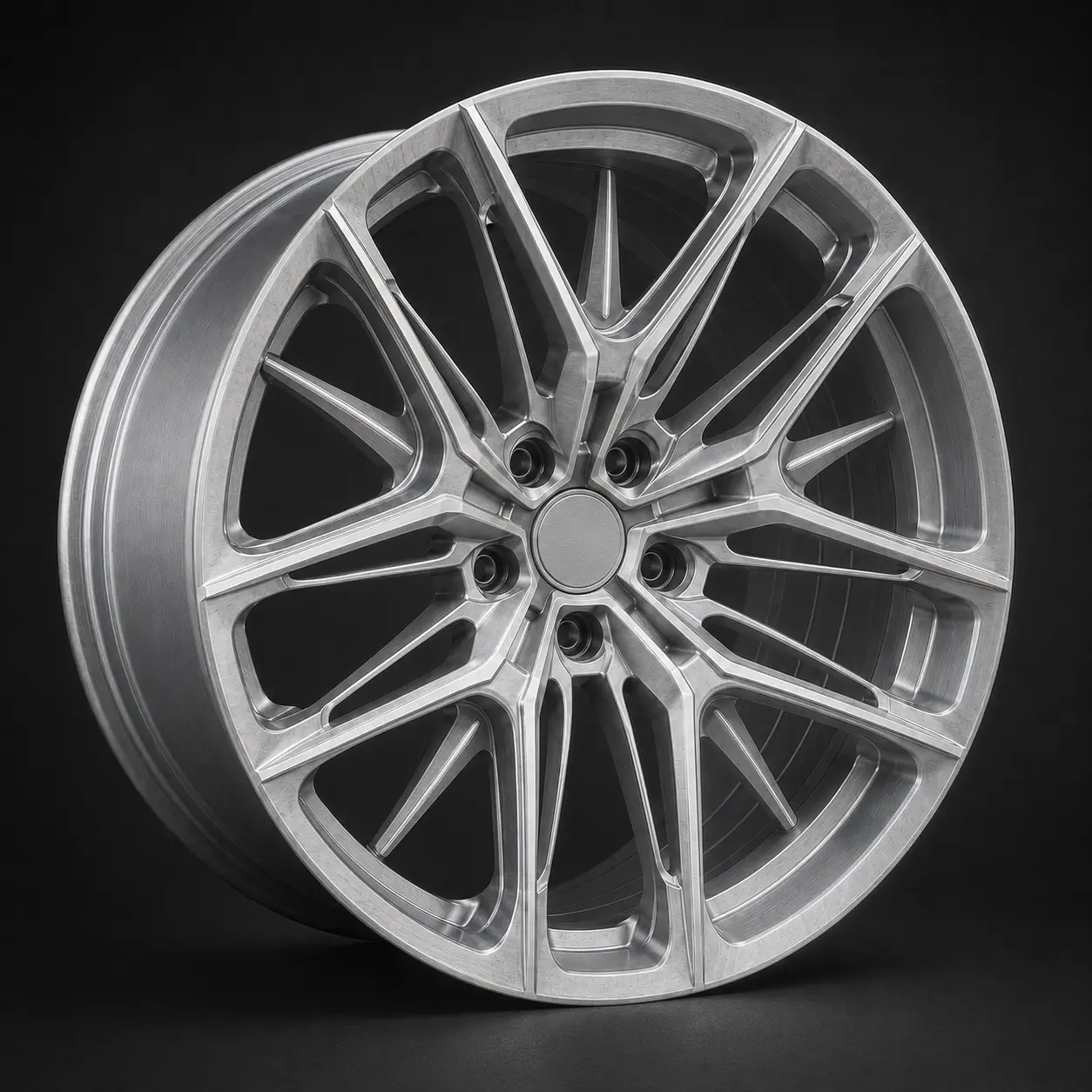
Brushed
Grain softens reflections and reveals movement.

Colour, surface and detail
Start with metal and light. We place colour, gloss and texture so every surface has a clear role.
Explore colour and finish
Material in changing light
Brushing direction, gloss, texture, edge highlights and depth decide whether the wheel feels technical, quiet, warm or expressive.
Start with what the light can reveal
Tool paths, grain, edges and pocket shadows already shape the wheel. Finish should reveal that architecture.
VISUAL STUDY ONLY — NOT A PRODUCED WHEEL, FINISH SAMPLE OR MACHINING RECORDSurface language
Grain softens reflections and reveals movement.
Sharper reflections heighten edges and transitions.
Even light calms complex geometry.
Tool paths become part of the expression.
Texture changes colour depth and perceived mass.
Contrasting surfaces add layers without new geometry.
Tailored finish references
Metal, colour, gloss and detail are read together. These digital aluminium plates give us a shared language before a physical sample and written finish basis define the project.
Surface & gloss
Transparent colour
Each screen tone below is an approximate RAL direction over a brushed-aluminium visualisation.
Solid colour
The same code can read differently through gloss, satin, matte or texture. Every screen tone remains an approximation.
Combinations
Mark & details
How the colour is defined
A useful industrial colour reference. The screen rendering is only an approximation.
A precise way to describe perceived colour when that system suits the project.
A communication reference—not an automatic coating specification.
The car's own code can start the matching conversation.
The agreed physical reference and written finish basis control the result.

Colour and surface inspiration
Use these colours, reflections and surface characters as visual starting points. The wheel itself is still being developed, so this page now shows inspiration and samples—not a configurable wheel.
Colour needs a job
Each boundary should follow a real surface transition.
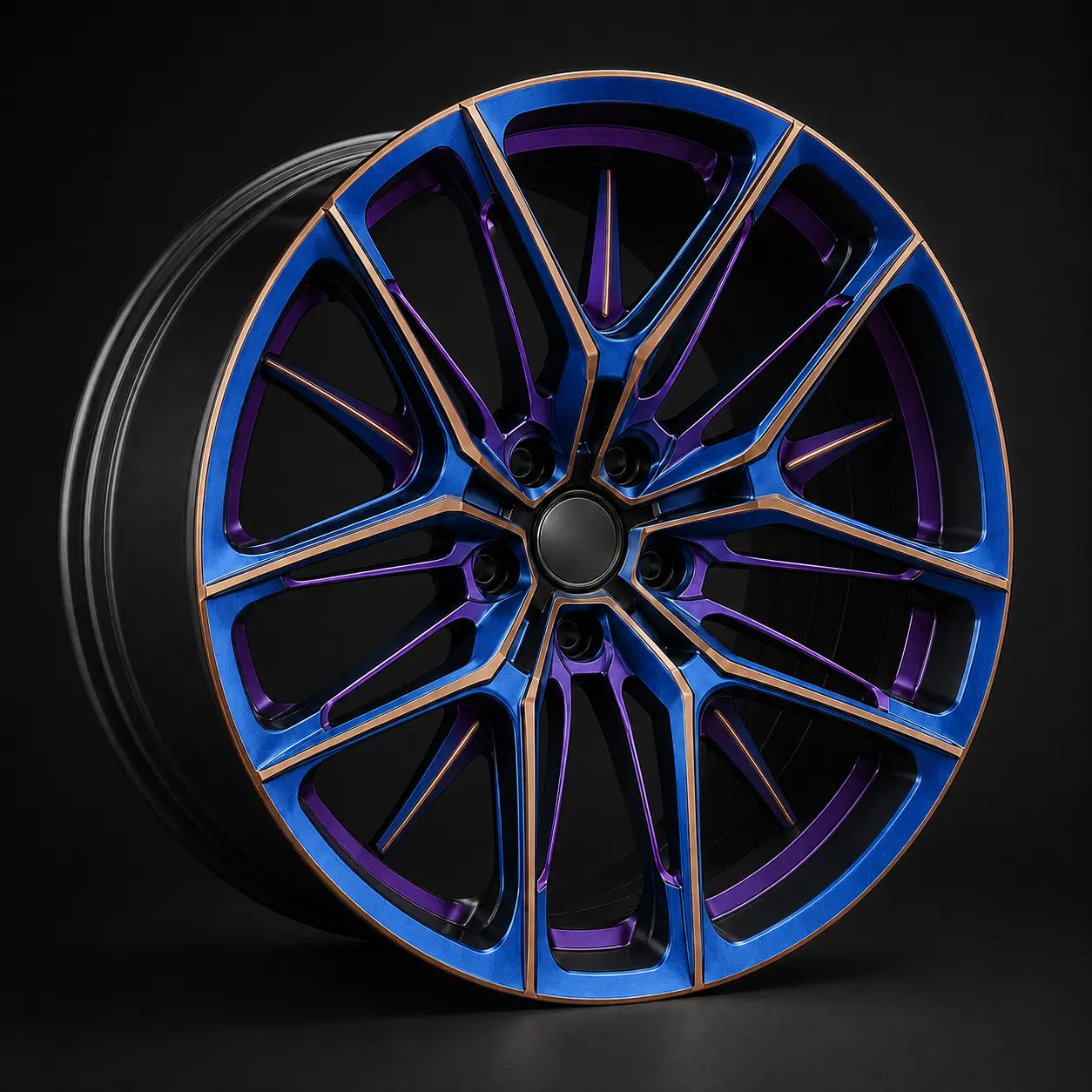
The surfaces read first in motion.
Reverse Spine can hold shadow or contrast.
Depth fields shape light and visual mass.
A fine frame can sharpen the diameter.
The field behind the spokes controls openness and depth.
A restrained final detail for approved project identity.
From screen direction to agreed finish
Paint, trim, brakes and body surfacing guide the surface, colour and contrast.
Give each surface and colour a clear role across face, depth, edge and rim.
A physical reference and written finish basis control preparation, gloss, texture, masking and tolerance.
We accept a limited number of projects each year.
 Tailored Wheels